Let me preface all this by saying, this is an opinion, not official. As a lot of musicians argue this both ways, I felt the need to write about my opinion, reasoning, and some commentary. All my research was done in a very casual setting and is only meant to support my opinion.
The Wrong Side
A percussion instrument is defined as an instrument that is struck to create sound (Percussion Family of Instruments: What Instruments Are in the Percussion Family?, 2022). A piano, as many of us know, uses hammers to strike strings and create that beautiful sound that is so familiar to us all. So, in a sense this is the perfect dictionary definition of a percussion instrument, right? Well, we can discuss that in the next section. If you need a spoiler though; it is not a percussion instrument.
The Right Side
My biggest reasoning behind not believing the piano is a percussion instrument is due to the fact that it has more strings than any other instrument in the modern orchestra (Percussion Family of Instruments: What Instruments Are in the Percussion Family?, 2022). If we call it a percussion instrument, then we would need to call it a string instrument, and if that is the case, then we have a cat-dog situation in my eyes. Do we lean towards which one it is closest to? If that’s the case, there are twice as many strings as hammers in a piano making it a stringed instrument.
Another argument is from a player’s perspective. I have a degree in percussion performance, which means, I am highly trained in anything percussion-wise, and I generally agree with that. If you give me something that is truly a percussive instrument, I can play it at a pretty high level. However, if you put me on a piano and ask me to play it, I am going to make it sound like the most hideous disgusting thing in the world. My college piano proficiency is up to a fourth semester, or two-year ability, which was a requirement for me to graduate. If I wanted to become a pianist, I would have gone to school for a piano performance degree.
Think about the main interface of a piano, which is the black and white keys (Miller Piano Specialists, 2020). If this is the primary interaction for performers, then we need to include things such as synths, electric keyboards, and organs (Miller Piano Specialists, 2020). This opens up an entire argument that usually has no end.
Classification
So how do we classify this instrument if it is not a percussion instrument? That seems to be the argument and question from both ends. For me, why can it not just be the piano or keyboard family? There are plenty of different instruments in the world that share the same interface but function just a little differently. I can agree it needs to belong somewhere, so let’s put it in its own family along with these other keyboard-style instruments.
Conclusion
Again, this is all an opinion and nothing I say should change what the piano is to you. As a lifetime percussionist, I disagree with every argument that has been made stating piano is a percussion instrument. While this argument will never end, I think it is important to appreciate what this instrument is capable of as well as how important it is to the music world today.
This is a hot topic for a lot of musicians and audiences across the country. Everyone can have a different reason for liking and hating this style of music. Controversies bring great discussions, and quite honestly, I love hearing different sides to this debate. I have heard great debates over this topic, and it is always fascinating. This blog will have 2 parts to it. The first will be just generalizing ATonal music and comparing it to tonal music. Part 2 will consist of composing a short ATonal piece of music.
Part 1
When did I start to like this stuff?
I’m not going to lie to you, I thought this music was the absolute worst thing to ever be created for a long time. I never thought I would appreciate this music in my life, I was all about tonal music. I loved Listening to harmonies, leading tones and cadences. I sounded like the typical freshman music student, but it all changed. As I began preparing for a recital, I was introduced to a piece by Karlheinz Stockhausen called “Vibra-Elufa.” This is a Vibraphone solo and it is HARD! This is an A-Tonal solo that uses different mallets to achieve a variety of timbres. I started reading down the first page, and I was on the verge of putting it away and picking something else. The original reason I chose this piece was that I wanted some variety and history in my recital. I never gave up and finished learning the piece and performed it in a masterclass. That is how I began to enjoy the music.
Tonal music is better right?
Look, I will not make up a decision for you, but let’s talk about this. Tonal music is great! I love tonal music. If I am taking a date to a concert, I am NOT taking her to see a 1900’s Symphony by Schoenberg. I’d probably take her to see a Beethoven Symphony long before I even show her Schoenberg.
Here is what makes tonal music so desirable and easy to listen too.
Major Key Chord Progression
A classic perfect authentic cadence is so nice to hear. It is the ultimate resolution in music. What makes this even better is how perfect the voice leading is. Every rule is followed perfectly and it is easy to listen to.
Maybe that’s where 21st-century music differs?
How is 21st-Century Music Better?
Ok, music is all subjective so I will never tell you what is better. The reason I enjoy 21st-century music is because of the rules to composition. THERE ARE NO RULES! You can literally write what you want. If you want parallel fifths, do it. If you want a tritone-based melody, go for it. The ideas are limitless. In tonal music, you are restricted by chordal functions, voice-leading, cadential motions, and more. How many different ways can you write a V-I cadential motion? The answer is 24. there are 24 keys, which means you can only do it 24 times. In ATonal music, your ideas are not limited to the key signature. In ATonal music, there is no one pitch that stands out more than the other. Every note is created equal, essentially.
So what do I listen to?
That’s an easy question to answer. Listen to the sounds. Generally speaking, music has a purpose and an inspiration while it’s easy to achieve that in tonal music, that’s where the challenge lies for ATonal music. Understand the theme of the piece before listening to it. If you picked up a piece of music entitled “Frisson” the first thing you need to do is find out the meaning of that word and how it relates to the composer. From there think about what you might hear in the piece. The number one rule to listening to this music is to not have expectations. Expectations tend to lead you back to tonal music. This piece, in my mind, sounds fast with a lot of large intervals. Maybe the smallest interval is a major 3rd. If the interval is not bigger than a major 3rd I could see it being a chromatic run-up and down the instrument.
Part 2
This requires some knowledge of ATonal theory!
How would you write ATonal music?
If you just write a bunch of different notes with random rhythms, you are not exactly achieving a theme or goal. ATonal music has a lot of different variables. Let’s take the example from above, “Frisson” and we are going to write a piece. First thing I like to look at is a tone row. If you don’t know what a tone row is, go read about it. Our tone row is going to be “50841t72e639.” You’ll see how I use this when we get started. Here are some other things you need to decide on first along with tone row: (my answers are in parentheses)
Instrumentation – (Solo Vibraphone)
Ryhtmic or not – (Not)
Timbre – (Exciting)
Possible length
Consistent forms/intervals – (Not too sure yet)
So, step one, establish the key and mood…Which in this style of music is chromaticism and speed. That means we are writing a fast chromatic scale right at the beginning. After that, I want to establish my tone row which is exactly what I did.
Screenshot straight from Finale
A couple of things you should look at and notice;
No time signature
No bar lines
No pedal markings
So when I said no rhythmic restrictions earlier, I achieve that here by not having any sense of time or end of phrases. So I took away the bar lines and time signature. The time signature is embedded as 1/4 to help with the accidentals. The pedaling will be added later. At this stage in the game, I am just trying to get a good structure.
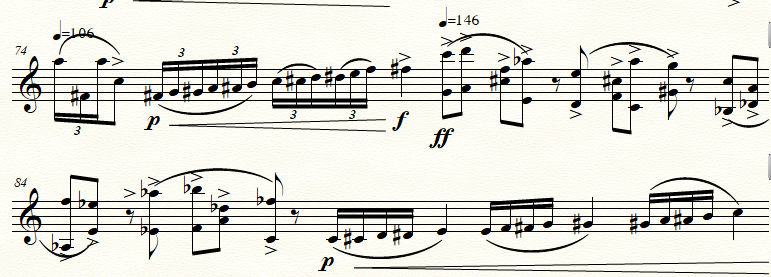
I began playing around with the tone row from earlier and found a prime form that I enjoy hearing which is (0258) There are times that this is very apparent in the piece. In the first impact point of the piece, I use that prime form in both hands at once outlining different chords. Right at tempo marking 146, it starts the phrase.
If you analyze the top line as one and the bottom line as a different one, every 4 notes are one chord with the prime form (0258). Also notice how large the intervals are, and how many chromatic scales there are throughout the fast sections. Keeping this clear throughout the piece is important for the theme we talked about earlier.
Contrasting Sections
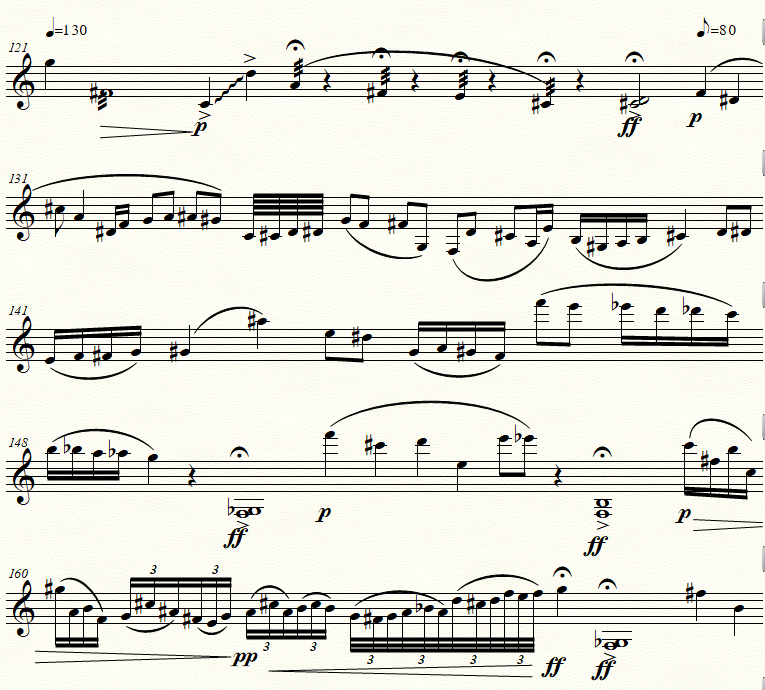
This is an extremely important point in this composition process. You must think of ways to make the piece interesting. If it is all fast chromatic lines, the audience will tune it out after 30 seconds. You have to make the composition interesting. So I have made sections that are very slow and delicate. Here is how I explain it. The second to last definition of Frisson is “A shudder of emotion.” When I think about emotional times, musically I feel slow non-complex melodies. In ATonal music, everything is complex so this brings a new challenge to the table. Check out what I did below starting at tempo marking 80.
This passage is very slow. I made the intervals a little smaller to help with the delicateness of the mood. There are some fast licks to help contrast the slow things, but that is all artistic choice.
Concluding a piece
So, in tonal music, it is a lot easier to conclude a piece with a PAC (Perfect Authentic Cadence) but you do not have any of that in ATonal music. For this piece, I had the idea of using an idea from centricity. Centricity uses a “center” but still follows the chromaticism characteristic of ATonal music. My center was pretty easy to decide on, which is F, or pitch class 5. There are 2 reasons for this;
It is the lowest note on the Vibraphone
it is the beginning of my tone row that I dictated earlier
Those ideas helped me create a pretty cool line that concluded the piece. Check out the final product below and let me know what you think!
End of blog
If you have any questions, comments or concerns, feel free to contact me and I would love to talk with you on whatever you may ask. Thanks for reading!
Here we are! We are finally done with this journey. Before we get into the nitty-gritty, let me first thank everyone for following and supporting me in this journey. It was not easy, and there was a lot of hard work. It is incredible to look back and see how my small thought has turned into something big. I read through the book this weekend and felt a euphoria of “I’m done.” I am beyond words for what this thing has come to be, and I am very excited to see where this leads me down the road.
For the New-Comers
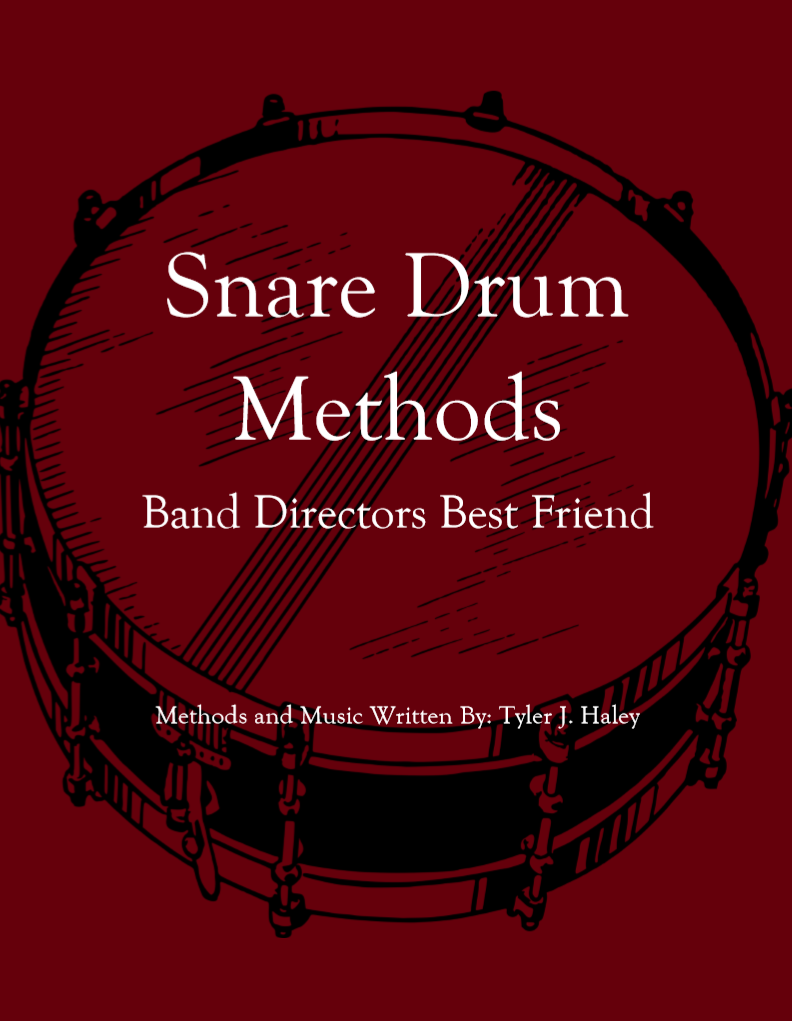
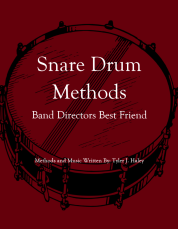
I wrote an etude book, packed with a step by step process of how to get your snare drum playing skills up to an intermediate level. The reason for this book is to help guide young musicians and educators in learning the details of snare drumming. Now, I know a lot of people are saying, “but you’re just a kid what makes this book different than others?” This book incorporates everything great from the staple snare drum books. It has everything!
Technique Instruction
Practice Instruction
Snare Drum History
10 Etudes
3 Orchestral Excerpts
Exercises
Interpretations for ALL Music
and MUCH More
There is truly nothing like it. This book combines everything you need to get started in the percussion world.
Why I am so passionate
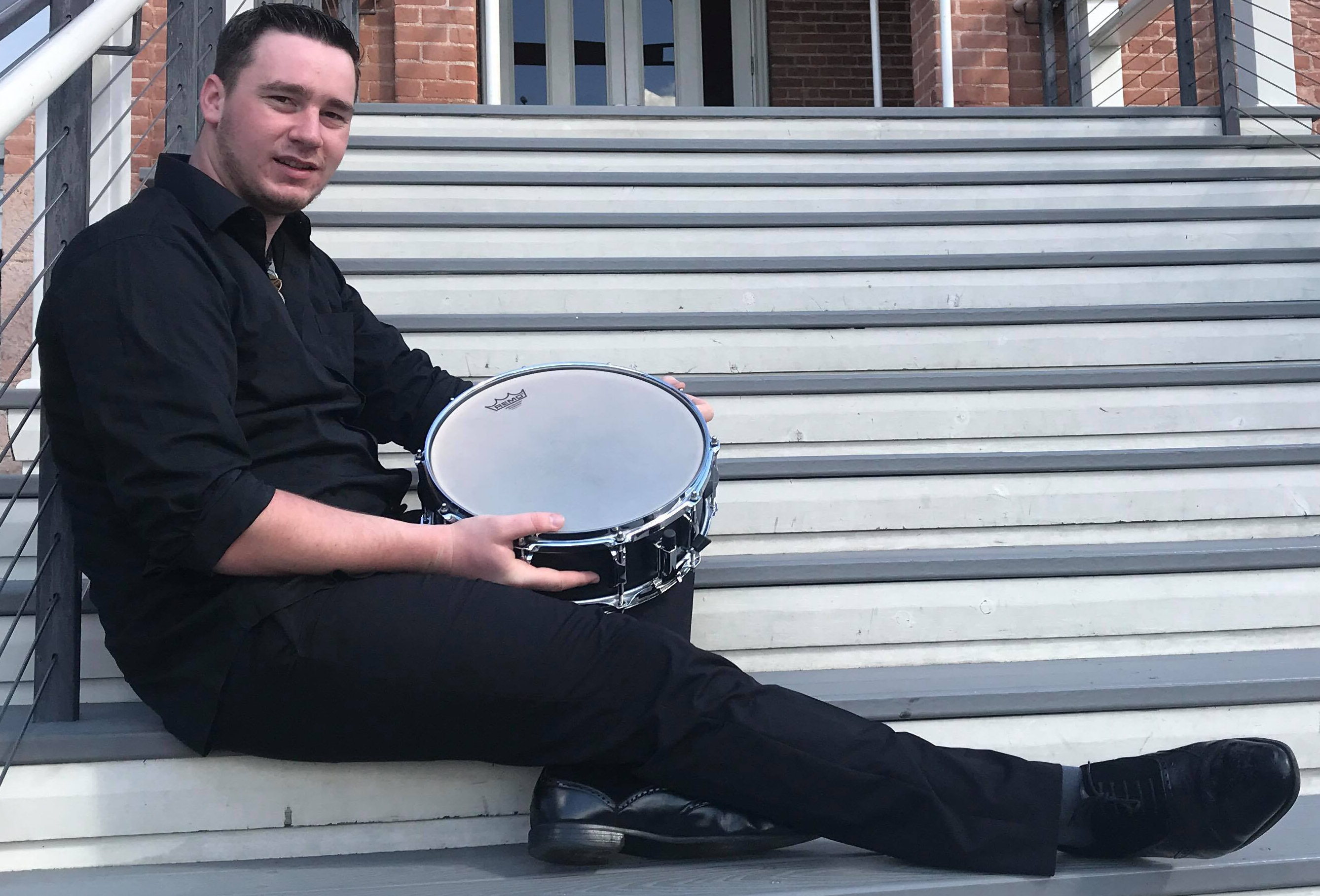
I believe that every percussionist should start playing the snare drum and here is why. It is easy to make music on a marimba, xylophone, etc., but it is difficult to make music on the snare drum. Keyboard instruments make music when you strike a key, a snare drum just makes a “thud” sound. Learning the snare drum teaches you;
Musicality
Rhythm
Phrasing
Artistic Decision
Technique
These things are ideas you can bring to any instrument, percussive or not. If you choose to learn how to play in the percussion section, this is something you need to know how to do. I believe this book can help you achieve all of that.
Video Advertisement
I made a short video to promote this book to people. It includes a video (without sound) of me playing etude 9. The absence of sound is due to copyright laws. I was playing the etude using a pop song as a metronome and as many of us know, that is against YouTube’s policy. I hope you enjoy it!
Statistics for the people who care
Pages – 107
Words – 16,519 (Approximate)
Etude Pages – 13
Excerpt Pages – 10
Weeks – 10
Days – 70
Hours – MANY!!!
Where can I buy it?
First of all, If you are interested at all, that is awesome! Thank you for your interest, and support. Now, I have not worked out the small details of how to distribute this book yet, but if you are eager to have this, I will be more than happy to talk with you and work it out. Contact me using my contact form below or on the Contact page.
I am so close to this thing being done! I have small details to iron out this week and then I will be done. This is a very exciting time for me and I cannot wait to finally finish this.
What am I Doing?
I am creating a compilation of 10 original etudes for a beginning to intermediate snare drummer. The goal of this book is to assist band directors and private instructors teach their intro level students. The reason I want to pursue this is that when I was in the early stages of my career I relied solely on YouTube videos, Drum Forums, and a lot of method books. When I got my first full-time teaching job at a high school in south Tucson, I noticed 2 things that were not working right and affected their education. Their band director, who is truly a great musician and teacher, probably one of the best in the world, did not know how to play percussion. When I first came up with this idea it was with that program in mind. The one thing I wanted to do was help programs like that who have incredible directors, and all they need is the right tool.
Update
This week I wrote 2 rudimental etudes to finish the composition portion of this project. My favorite part about writing rudimental etudes is that I get to play them to popular music which is a lot of fun. I also started writing about them this week and I am not quite done with that but that will probably be done very soon. The most important thing I talk about is the difference in Rudimental drumming vs. concert drumming. I’ll talk about that later, but it is a big difference and being able to separate that is important at an early stage.
Next week
I will be completely done with everything. No joke, everything will be done! I will have all the excerpts done, as well as every explanation and write up for the compositions. This will not be easy, but It will happen. I am at 64 pages and I am expecting about 10 more pages before I am completed so that means I have 10 pages to write.
Rudimental Drumming
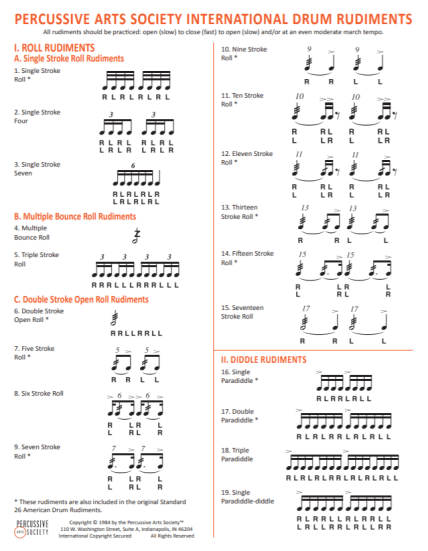
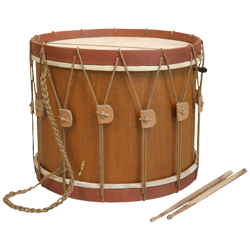
So this style of drumming is the style that marching band drummers would use. It is a very precise and rhythmic style of drumming. The way most people write or understand these pieces is by studying the Percussive Arts Society 40 Rudiment Chart. The rudiment chart is like scales for a snare drum. This is not a 100% correct way of looking at it, but it is a good way to begin practicing. So, composers put these rudiments together in different ways to make rudimental solos. This style is different for a few reasons and I think the biggest reason is due to the equipment. Usually, for concert snare drum playing, you use thin sticks with a shorter drum, but for rudimental drumming, you usually use a field drum which is deeper and bigger sticks. That alone separates the two styles because of the timbre. I’ll attach a concert etude and a rudimental etude to show you the different ways they are written.
Download them and give them a go! The rudimental etude was written using a similar structure to a song I have been listening to a lot lately. I’m not going to tell you what it is because I want you to come up with your own way of learning this.
More stuff?
Well, my high schools competed this weekend at the state championship and they did pretty well. Sabino HS took home 6th place, and Sahuarita HS Took home 1st place, so overall it was a very successful weekend for both programs. That’s it though. I have mostly been working on this and solo repertoire.
Wow! This week was crazy! I played in the AZPAS Day of Percussion Kick-off Concert, attended a few clinics, wrote some etudes, and went to Gilbert, AZ for a drumline competition! A lot of stuff going on.
What am I Doing?
I am creating a compilation of 10 original etudes for a beginning to intermediate snare drummer. The goal of this book is to assist band directors and private instructors teach their intro level students. The reason I want to pursue this is that when I was in the early stages of my career I relied solely on YouTube videos, Drum Forums, and a lot of method books. When I got my first full-time teaching job at a high school in south Tucson, I noticed 2 things that were not working right and affected their education. Their band director, who is truly a great musician and teacher, probably one of the best in the world, did not know how to play percussion. When I first came up with this idea it was with that program in mind. The one thing I wanted to do was help programs like that who have incredible directors, and all they need is the right tool.
Update
I have 1 more etude left! I have to write 1 more etude to reach my 10 etudes. I also need to write out one more excerpt. I am almost there! It is hard to believe that this compilation is almost done! So far, the hardest part in the entire book is three-stroke ruffs which is a near college level rudiment. The reason I felt like this was a good time to introduce it is so that high schoolers can start developing their three-stroke ruffs early. Perfection is not the goal, the goal is to introduce these musicians to different techniques their director might not know. I was talking with a few music educators and known of them knew how to approach this technique. Most of them didn’t even know it had a name associated with it. So, my consensus was that maybe the reason high school percussionist do not know how to do this is that band directors do not know it exists! I even wrote out the different ways you can approach the three stroke ruff that way there is no confusion. Check it out for yourself!
AZPAS
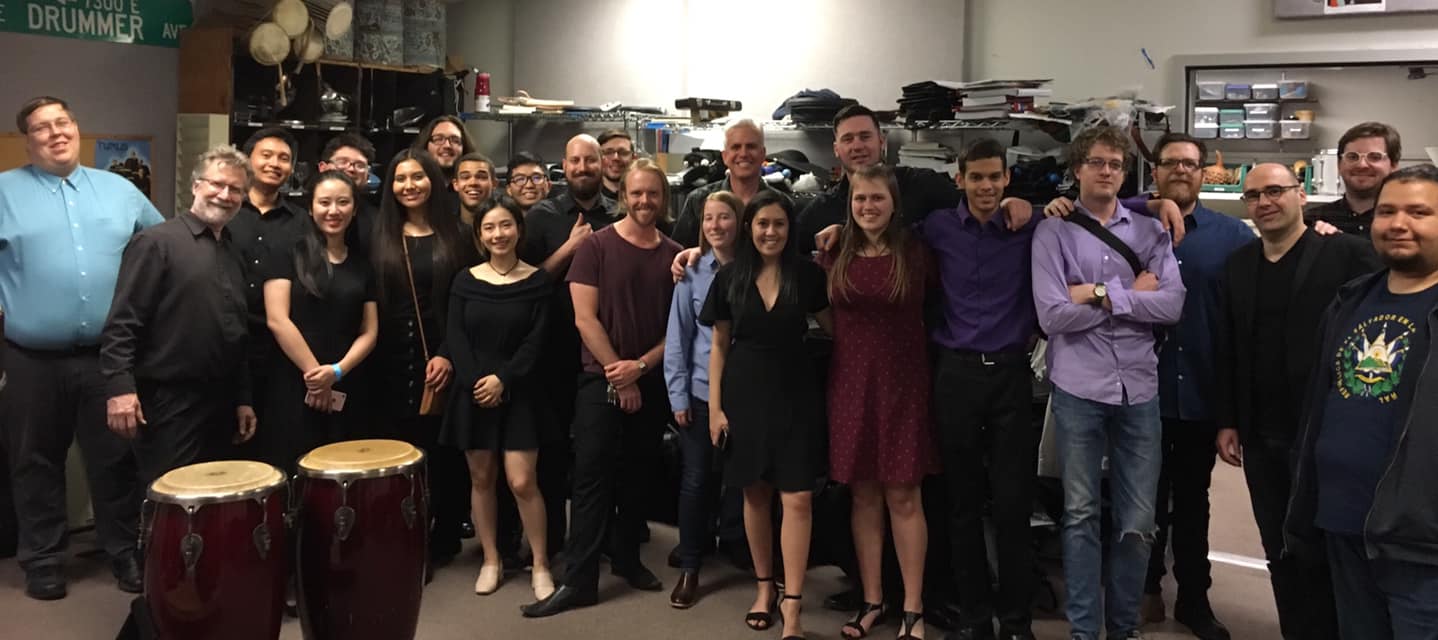
So, if you recall from my post-spring break blog, I said I was playing in the AZPAS Day of Percussion Kick-Off Concert. That was this past Friday night on the 22nd and I must say, it was a lot of fun! The Arizona State University Percussion Ensemble made an appearance on the program and they were just amazing to have down here. All of them represented themselves as well as their university in the best way. I did not get to talk to them much, but the few encounters I had with their members was just incredible.
WGAZ
Alright, so Saturday the 23rd was really cool! Both of the high schools I teach at competed at Basha High School and they both took home the 1st place prize in their divisions! It was awesome! They also did a mass warmup in the lot together which was loud, to say the least! I’ll add a few pictures for you to see. With that, they head into the last week of the season, so we got work to do!
Snare Drum Methods Goal for Next Week
Everything will be done! That is the goal. I do have a lot going on, but I want it to be done. This has been a long time coming and I am very excited to see the final product. It will take a lot of work, and I know it won’t be easy, but I will make sure it happens! Talk to you soon!
Guys, I came up with a great idea for this project! I’m going to add a section of orchestral excerpts with interpretations and images with and without interpretations. There’s a section below about this, so read that but I am very excited about it.
What am I doing?
I am creating a compilation of 10 original etudes for a beginning to intermediate snare drummer. The goal of this book is to assist band directors and private instructors teach their intro level students. The reason I want to pursue this is that when I was in the early stages of my career I relied solely on YouTube videos, Drum Forums, and a lot of method books. When I got my first full-time teaching job at a high school in south Tucson, I noticed 2 things that were not working right and affected their education. Their band director, who is truly a great musician and teacher, probably one of the best in the world, did not know how to play percussion. When I first came up with this idea it was with that program in mind. The one thing I wanted to do was help programs like that who have incredible directors, and all they need is the right tool.
Update
So my goal for this week was to get all of my written interpretations and things of that nature caught up, and I did! It took a lot of work, determination, and loss of sleep. It was a lot of fun though because I was able to look back and appreciate the amount of work I have already put into this. Surely it’s going to take a lot more work to finish this but I am definitely on the home stretch of getting raw material done.
My Idea
I was talking to a friend this week about photography, visual art, and the legality of using them as apart of merchandise and such. This friend of mine told me about the public domain for visual arts and told me it is legal to use the public domain stuff as a business model. So I did a lot of research into making money off the public domain sheet music to see what it was about. I found that I can use sheet music from the public domain as a part of my current project without obtaining permission.
So, I began to research what the most common snare drum repertoire was for orchestra auditions, then I trimmed away the really difficult excerpts, and came up with three. The three excerpts are going to be:
Lieutenant Kijé (Mvt. 1)
Sergei Prokofiev
Concerto for Orchestra (Giuoco Delle Coppie)
Béla Bartók
Rapsodie Espagnole (Feria)
Maurice Ravel
I feel like these three are very important and common when it comes to orchestral auditions, and college auditions. So what I began to do was create 2 pieces of music per excerpt. Heres what each excerpt gets:
How the excerpt would be written at an audition
Interpretive notes that are also discussed in the written notes
They would look a little like this.
Original Bartok Score
Bartok with edits
I am very excited about this addition because I think it will make this compilation demanded more by students and educators.
Other News?
Well, not really anything big, but I have my high schools scores from this past weekend!
Sahuarita won their competition with an 81.something which is cool because now we go
Sahuarita’s Logo
into state finals in the first seed.
Sabino Got a 71.00 and took home silver this weekend which is awesome as well because we hold the 4th seed going into state finals.
So a great weekend all around! they both compete this weekend and I am really looking forward to it!
How can you help?
I am still accepting applicants to join me in this project. The steps are extremely easy. Just go to my projects page and scroll to the bottom. Follow the steps and you are all set! Have any questions? Fill out my contact form and I will get back to you as soon as possible.
Spring break was amazing! I did a lot of work preparing for my senior recital, and I finally got my date finalized! April 21 at 7:30 pm is my senior recital date as of now. Outside of that, I was able to write another Etude, as well as edit all of my past etudes. So, a productive two weeks, and now reality hits.
What am I doing?
I am creating a compilation of 10 original etudes for a beginning to intermediate snare drummer. The goal of this book is to assist band directors and private instructors teach their intro level students. The reason I want to pursue this is that when I was in the early stages of my career I relied solely on YouTube videos, Drum Forums, and a lot of method books. When I got my first full-time teaching job at a high school in south Tucson, I noticed 2 things that were not working right and affected their education. Their band director, who is truly a great musician and teacher, probably one of the best in the world, did not know how to play percussion. When I first came up with this idea it was with that program in mind. The one thing I wanted to do was help programs like that who have incredible directors, and all they need is the right tool.
Etude 6
Etude 6 was an attempt at making the snare drum feel like a melodic instrument. While I see etudes as a way of learning, they can also be used as a piece of music. All the best percussionist learned through music, so why not create music while learning here? That was my approach to this etude. The first 5 etudes where to solidify technique, now its time to start playing music. This Etude goes between 9/8 and common time to help with transitions. It also uses very expressive dynamics. A lot of softs and louds. In the interpretation section, I wrote about playing zones on the drum. That can be a very weird topic for young players. Most players are taught to play just off center on the head and now we are talking about using the edge of the drum for expression. Any young player would be confused. The goal for this Etude is to be that bridge from beginner to intermediate drumming. This piece has hard rhythms in it, and that’s good! It also has easy rhythms, just adding ornaments such as grace notes, and accents. A lot is happening in this etude and that’s good! I wanted this to be a harder etude to learn.
This is a very fun etude! I encourage you all to check it out when I am finally complete with this project.
What’s next?
I have been lacking really hard on the text write up and this week I am dedicating myself to getting that fixed! I will make sure all my explanations are written out, making sense, and relevant.
Other News?
Not really. The high schools I teach at both compete this weekend and I am very excited to see the outcomes. They are both working extremely hard! Sabino will be in Phoenix, and Sahuarita will be in Oro Valley. I will be traveling to Phoenix to meet Sabino and hopefully, they bring it!
Arizona’s Day of Percussion is coming up this next weekend on the 22nd and 23rd! Stay tuned for more on that!
How can you help?
I am still accepting applicants to join me in this project. The steps are extremely easy. Just go to my projects page and scroll to the bottom. Follow the steps and you are all set! Have any questions? Fill out my contact form and I will get back to you as soon as possible.
Yes, as the title says, I have completed half of this methods book! To put into perspective, how much work has gone into this, I have completed about 50 pages.
This is what my word document says. This does not include covers and table of contents
Yes, that is correct, 50 pages. Now, that does not mean this book is going to be 100 pages because I believe the bulk of the written work is done. For now, the Etude pages start on page 30. That means I have only 20 pages dedicated to real music. Now we get into the fun part though.
What am I doing?
I am creating a compilation of 10 original etudes for a beginning to intermediate snare drummer. The goal of this book is to assist band directors and private instructors teach their intro level students. The reason I want to pursue this is that when I was in the early stages of my career I relied solely on YouTube videos, Drum Forums, and a lot of method books. When I got my first full-time teaching job at a high school in south Tucson, I noticed 2 things that were not working right and affected their education. Their band director, who is truly a great musician and teacher, probably one of the best in the world, did not know how to play percussion. When I first came up with this idea it was with that program in mind. The one thing I wanted to do was help programs like that who have incredible directors, and all they need is the right tool.
Update
Since this methods book is going to have 10 etudes, being halfway means I am finished with Etude 5, right? YES!! Today I finished Etude 5 with all the interpretations and handwritten notes. It is exciting because I wrote etude five in a 3/8 time signature, which is very fun and exciting! This etude reminds me a lot of a Delecluse etude, but for beginners. The reason I say that is because of how detailed I am making the interpretations. I made them so precise to the point of the exact start of a hairpin, and how long a dynamic should be maintained. It is extremely detailed. To put it into simpler terms.
I’ll attach a picture and PDF download here (Etude 5). That way you can see where I am actually at in this thing.
Biggest Problems?
Well, my biggest problem is always going to be time, but this week I was very focused on solo repertoire. Now, while that is good, I did not manage my time well at all this past week. Now I am coming up on spring break from school and that leaves a lot of time to figure out the rest of the semester which also includes this project.
Next Week
As my schedule is laid out, this next week I wanted to give myself a lighter schedule so I can come back with a fresh mind and new approach. I say that now, but I doubt that actually happens. The next time that I write, hopefully, I will have through Etude 8 completed and ready. Whether or not that is this next week or the following week, I do not know.
How Can You Help?
I am still accepting applicants to join me in this project. The steps are extremely easy. Just go to my projects page and scroll to the bottom. Follow the steps and you are all set! Have any questions? Fill out my contact form and I will get back to you as soon as possible.
The winter drumline season is in full swing and it is VERY exciting! This season I am teaching at Sabino High School as well as Sahuarita High School. Both schools are making great progress from when I first started working there and I could not be happier.
How do we compete?
We compete in the Arizona circuit called WGAZ which follows similar guidelines as WGI, which is the national circuit used for this activity. While these schools are about 30 to 40 miles apart, they are both fighting for the same thing and that is a gold medal. Luckily for me, they are in different divisions. In WGAZ, the divisions are split up by 3, World Class, Open Class, A Class. After that, they split up A class into 3 more sections, which is, A National, A Local, and A Regional. Those divisions are chosen by pure talent level. The best units, within A class, would be in A National, A Local would follow, and then A Regional would be the beginning drumlines. Sahuarita is in their very first year in competition, so by default, they are listed into A Regional. Sabino is competing this season in A Local which is right above them.
Sabino has made great progress in its program this year. I work primarily with the front ensemble, but I do step in occasionally on battery. What that means is that if I talk about anything it probably means front ensemble. Their music sounds good and I think they could easily be a powerhouse in their division this year. They compete in the WGAZ Percussion focus show coming up and I cannot wait to see what they can do.
Sahuarita had their first competition in its program’s history this past weekend! See their scores here. (Sahuarita’s Score 2/23) I showed up late to their lot so I can’t really talk too
Sahuarita High School Logo
much about it. There was a serious accident on the interstate which caused there to be an incredible amount of traffic. It got so bad that people were standing outside of their cars waiting for traffic to move. Anyways, when I got to the lot, I worked with their cymbal line, which is why I was hired there, and we had a great lot rehearsal together. That set them up for an extremely successful first place run of their show. They compete next at the same Percussion Focus show that Sabino High School will be at.
Percussion Focus Show
This Percussion Focus Show that I keep talking about is very special for 2 reasons. I don’t want to seem bitter, but here are the reasons.
I get to see where my schools line up with a lot of other schools. Almost every unit in the state will be in attendance.
Sahuarita is competing against the high school I graduated from. (Horizon High School)
I haven’t had much communication with my old high school because I have no connection to them. After my brother graduated in 2017, I have had no reason to check in on them. This will be a nice reunion with them and I am very excited to see how they do.
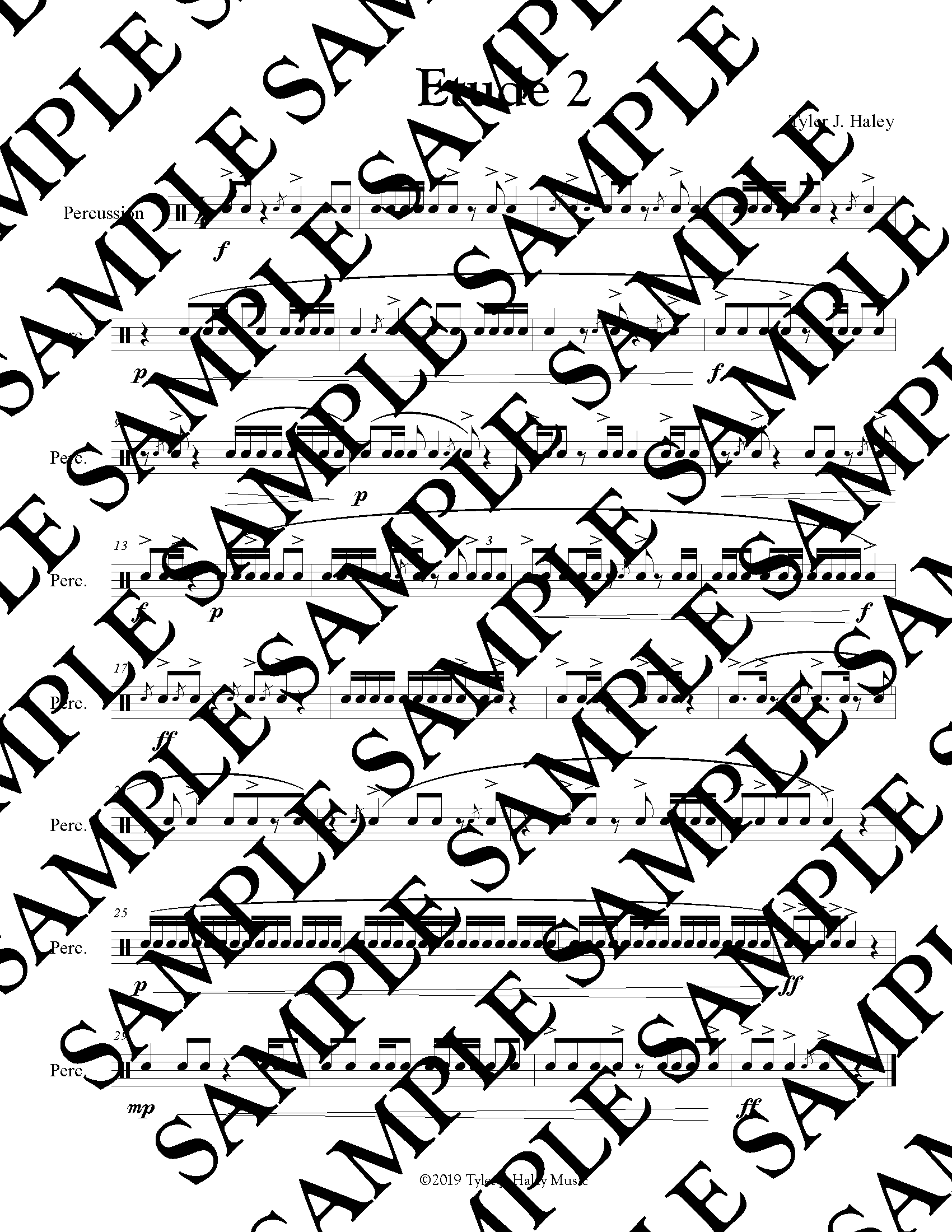
I have played through all of the written etudes so far. My favorite one so far is definitely Etude 2. The reason I say that is because it is just so musical! It is can easily be accomplished by a beginner with the right amount of time and detailed work.
Etude 2 w/ Watermark
After playing through all of them I made the necessary adjustments and got them ready to send out. I am currently waiting to get all my written work proofread by a professional writer to make sure I am writing English. I have a few friends that are very excited to see what I have done so far and they have offered their time to help me make sure this thing is ready.
Biggest Struggles This Week
TIME! I know it sounds obvious, but I did not plan on the amount of work I had planned for this week. I found the time to do what needed to happen, I stayed up later than I should have, worked through my lunch time, and used up every last minute that I had. I met my weekly goal, but I need to manage my time a little better for this upcoming week because I got a lot to do this week.
What I Learned
This week I wrote a short essay about two very important topics in percussion literature. Janissary music and the side drum/tabor are kind of the beginning of the percussion trend. You see, I am taking a class on percussion literature and one of the topics is entitled “History of Snare Drum” and I thought to myself “How convenient is this unit?” I’ll talk later on about what I learned, but essentially what I did was take that information, cite it, and created a new section in this book.
So, essentially what I learned was that the tabor was the beginning of the snare drum phenomenon. Although, it was the side drum that helped introduce what we know as the modern day snare drum. What I learned was that as the tabor got bigger in size, it eventually evolved into the side drum. So the next question is “Why does that make a side drum a snare drum?”
A tabor is a double-sided drum, and a side drum is a double-sided drum as well. The difference is that the snares on a tabor are on the batter side of the drum while the side drum has them on the resonance side. Like our modern day snare drum, the side drum is similar in that aspect. In thousands of articles, you can read about how in the modern day orchestras they still call for the side drum, but not the tabor. that has actually been happening since about the 18th century. Think about when the last time you had a part that said “tabor” and then think about when you last saw “side drum.” In my many years of percussion, I have yet to see a “tabor” part, but I always see “side drum.”
What I’m Doing for Next Week
Next week I want more etudes and some more research into different excerpts. While I am more of an orchestral drummer, I want to research more wind band repertoire. I have experience playing Holst and Grainger, but every college percussionist does. I want
Buzz Roll Example
to research more David Maslanka, John Barnes Chance, William Schuman, and Claude Smith. While I don’t know too much about these four, I do know that every wind band plays pieces by these four composers consistently. While these composers are still under American copyright laws, I see it being very difficult to obtain excerpts to help me with this project. Regardless of that, I will do my best to get excerpts for these studies.
Want to get Involved?
I am still accepting applicants to join me in this project. The steps are extremely easy. Just go to my projects page and scroll to the bottom. Follow the steps and you are all set! Have any questions? Fill out my contact form and I will get back to you as soon as possible.

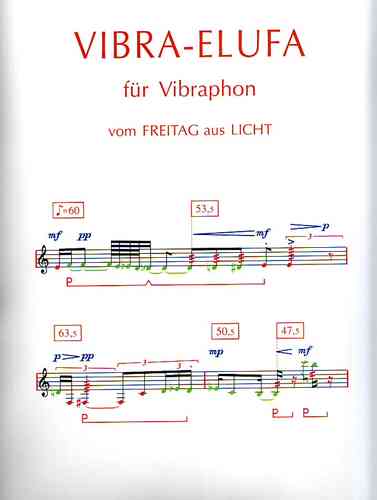 created for a long time. I never thought I would appreciate this music in my life, I was all about tonal music. I loved Listening to harmonies, leading tones and cadences. I sounded like the typical freshman music student, but it all changed. As I began preparing for a recital, I was introduced to a piece by Karlheinz Stockhausen called “Vibra-Elufa.” This is a Vibraphone solo and it is HARD! This is an A-Tonal solo that uses different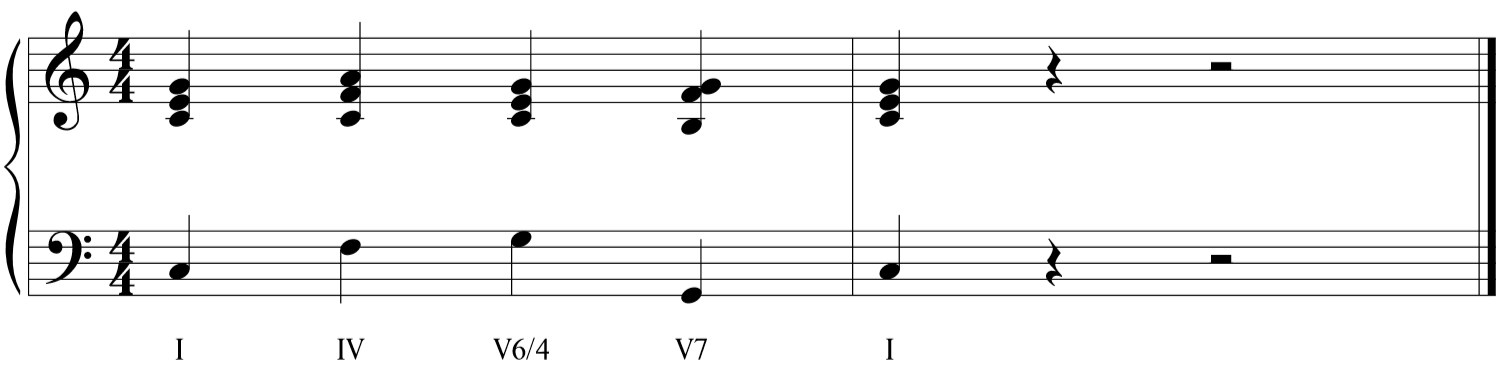
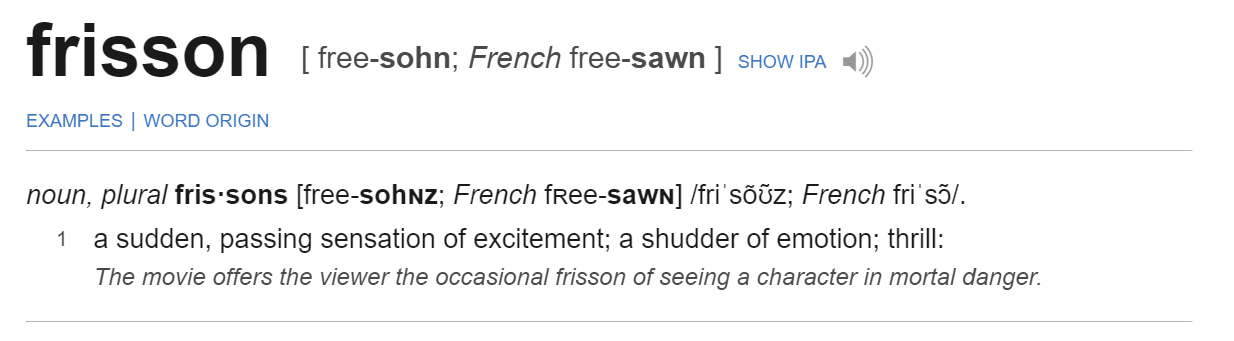 what you might hear in the piece. The number one rule to listening to this music is to not have expectations. Expectations tend to lead you back to tonal music. This piece, in my mind, sounds fast with a lot of large intervals. Maybe the smallest interval is a major 3rd. If the interval is not bigger than a major 3rd I could see it being a chromatic run-up and down the instrument.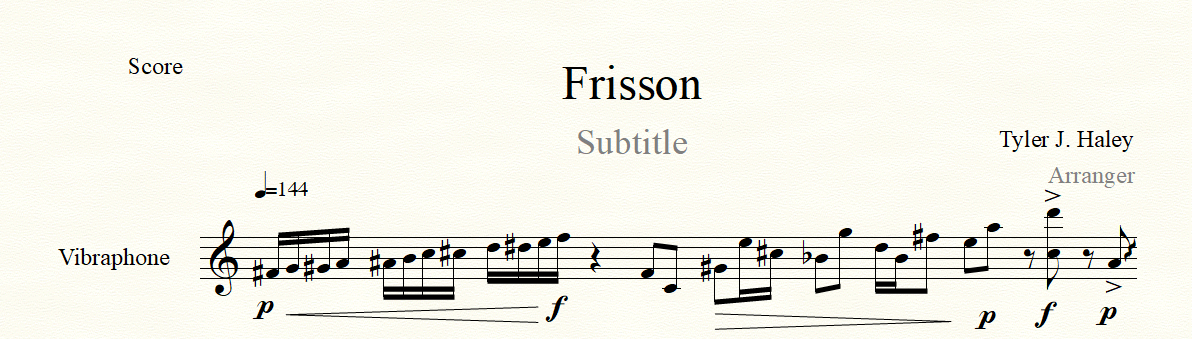

 playing skills up to an intermediate level. The reason for this book is to help guide young musicians and educators in learning the details of snare drumming. Now, I know a lot of people are saying, “but you’re just a kid what makes this book different than others?” This book incorporates everything great from the staple snare drum books. It has everything!
 is easy to make music on a marimba, xylophone, etc., but it is difficult to make music on the snare drum. Keyboard instruments make music when you strike a key, a snare drum just makes a “thud” sound. Learning the snare drum teaches you;
 early stages of my career I relied solely on YouTube videos, Drum Forums, and a lot of method books. When I got my first full-time teaching job at a high school in south Tucson, I noticed 2 things that were not working right and affected their education. Their band director, who is truly a great musician and teacher, probably one of the best in the world, did not know how to play percussion. When I first came up with this idea it was with that program in mind. The one thing I wanted to do was help programs like that who have incredible directors, and all they need is the right tool.
 more pages before I am completed so that means I have 10 pages to write.
 these pieces is by studying the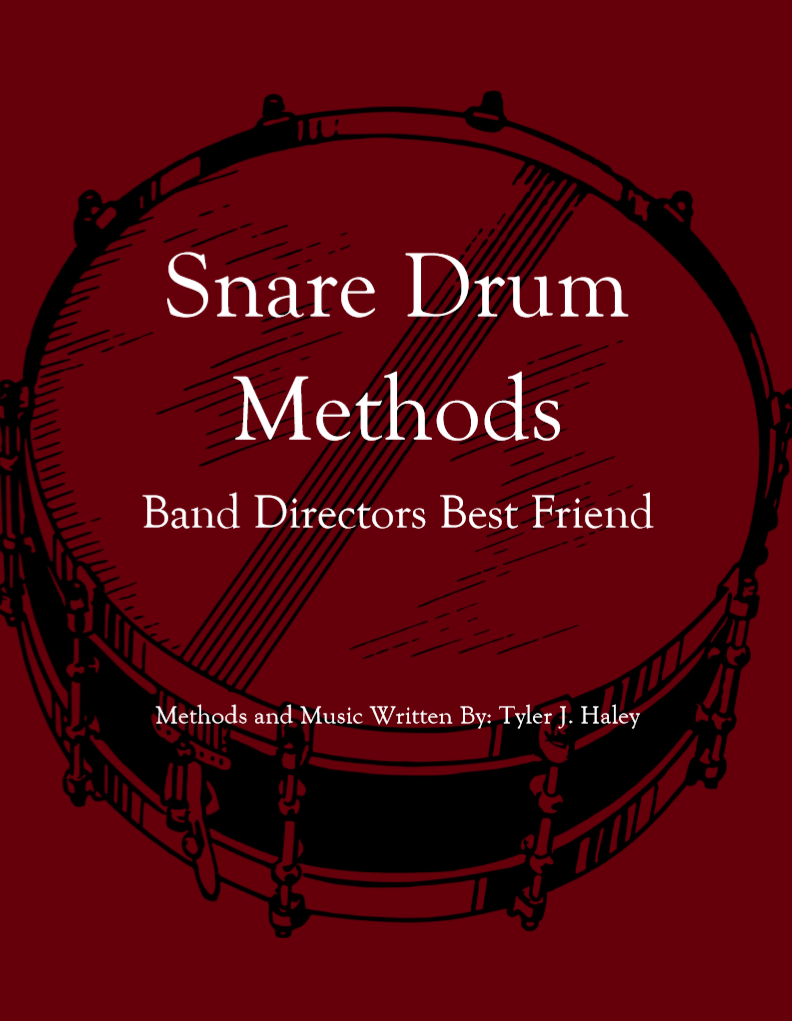
 early stages of my career I relied solely on YouTube videos, Drum Forums, and a lot of method books. When I got my first full-time teaching job at a high school in south Tucson, I noticed 2 things that were not working right and affected their education. Their band director, who is truly a great musician and teacher, probably one of the best in the world, did not know how to play percussion. When I first came up with this idea it was with that program in mind. The one thing I wanted to do was help programs like that who have incredible directors, and all they need is the right tool.
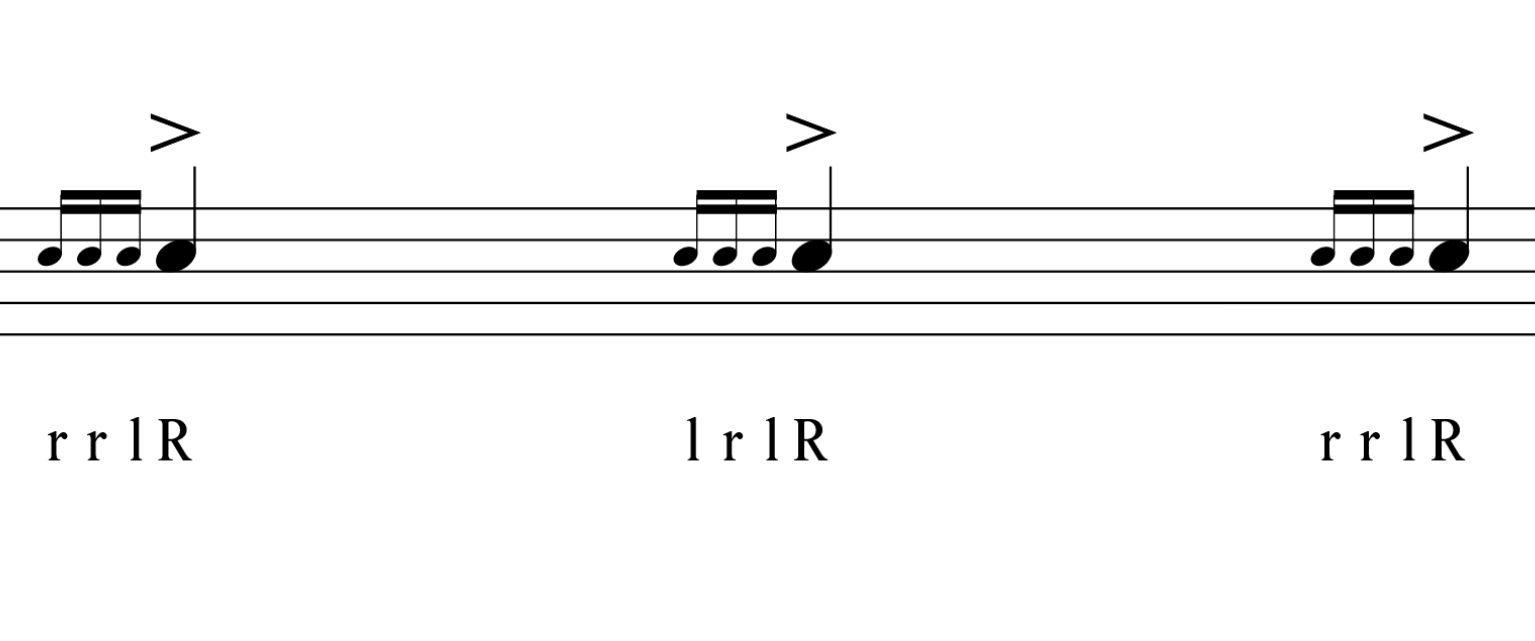 them knew how to approach this technique. Most of them didn’t even know it had a name associated with it. So, my consensus was that maybe the reason high school percussionist do not know how to do this is that band directors do not know it exists! I even wrote out the different ways you can approach the three stroke ruff that way there is no confusion. Check it out for yourself!
 represented themselves as well as their university in the best way. I did not get to talk to them much, but the few encounters I had with their members was just incredible.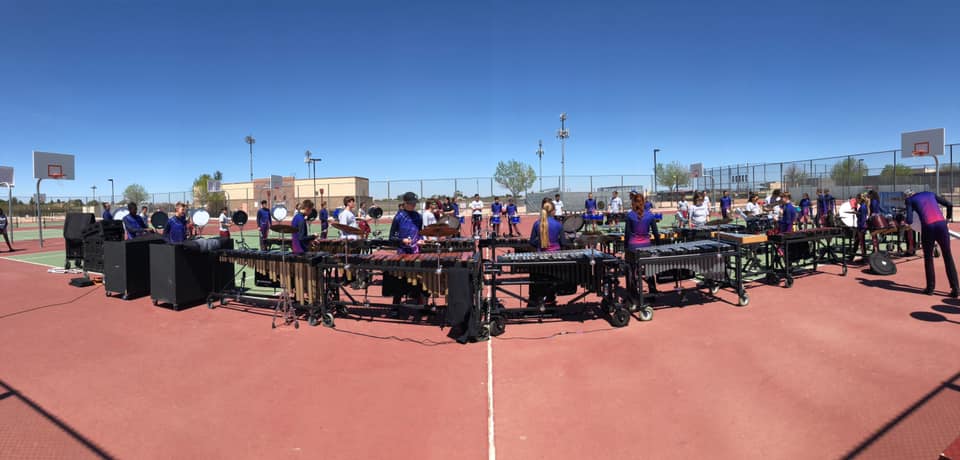
 stages of my career I relied solely on YouTube videos, Drum Forums, and a lot of method books. When I got my first full-time teaching job at a high school in south Tucson, I noticed 2 things that were not working right and affected their education. Their band director, who is truly a great musician and teacher, probably one of the best in the world, did not know how to play percussion. When I first came up with this idea it was with that program in mind. The one thing I wanted to do was help programs like that who have incredible directors, and all they need is the right tool.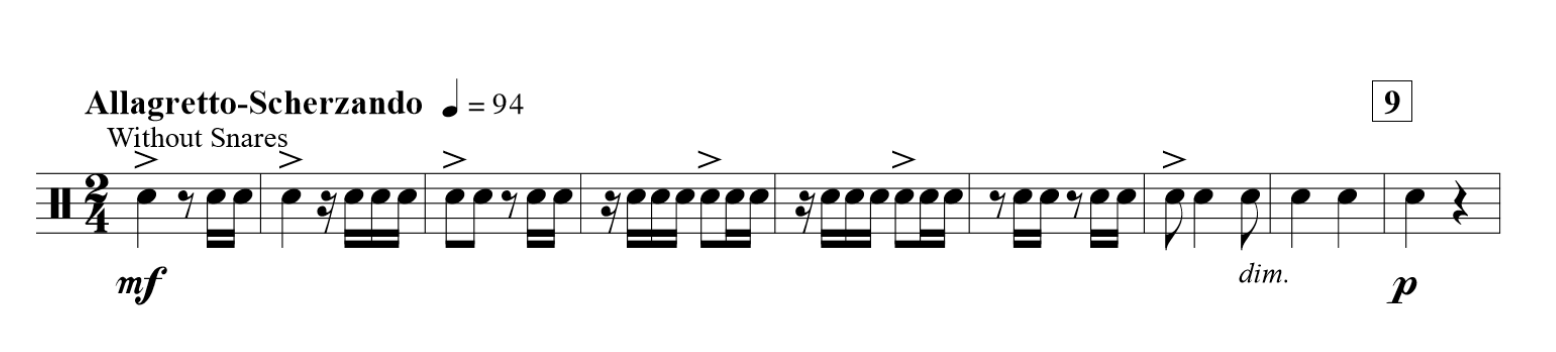
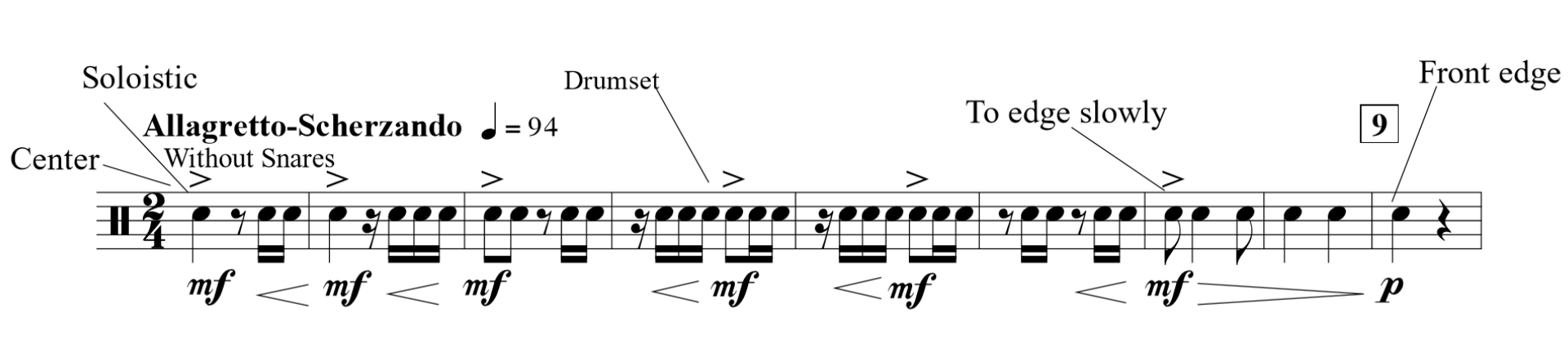

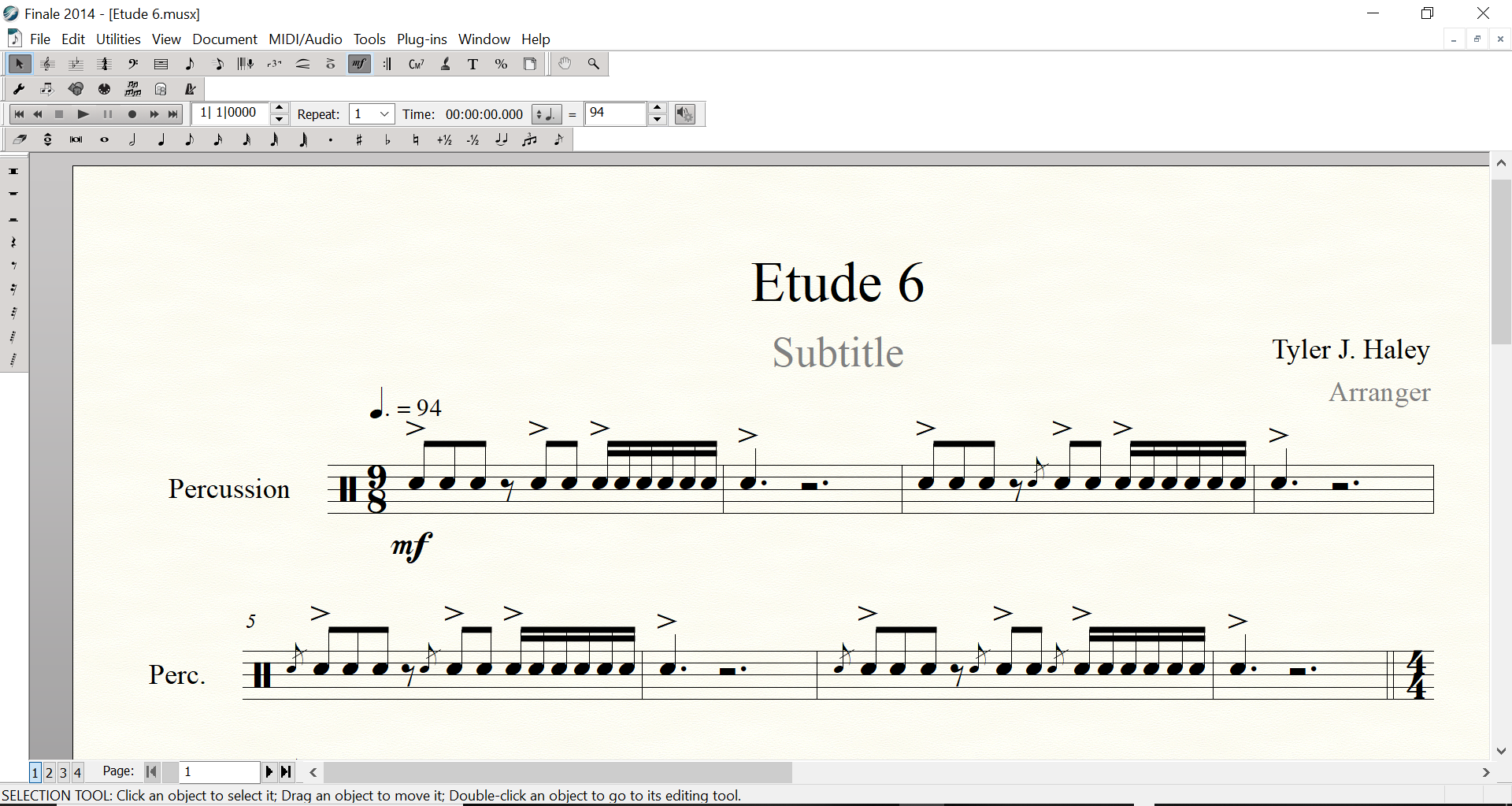 see etudes as a way of learning, they can also be used as a piece of music. All the best percussionist learned through music, so why not create music while learning here? That was my approach to this etude. The first 5 etudes where to solidify technique, now its time to start playing music. This Etude goes between 9/8 and common time to help with transitions. It also uses very expressive dynamics. A lot of softs and louds. In the interpretation section, I wrote about playing zones on the drum. That can be a very weird topic for young players. Most players are taught to play just off center on the head and now we are talking about using the edge of the drum for expression. Any young player would be confused. The goal for this Etude is to be that bridge from beginner to intermediate drumming. This piece has hard rhythms in it, and that’s good! It also has easy rhythms, just adding ornaments such as grace notes, and accents. A lot is happening in this etude and that’s good! I wanted this to be a harder etude to learn.

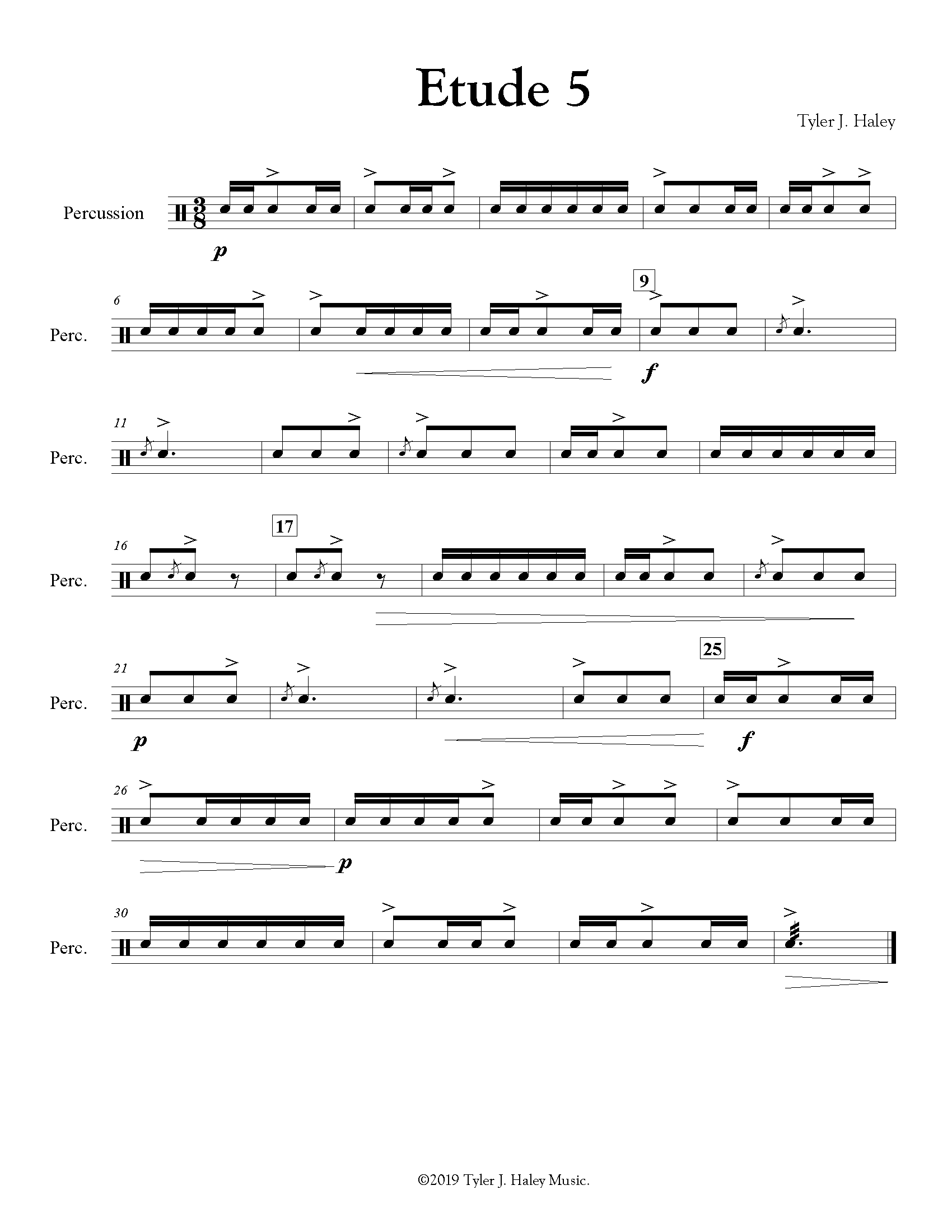 handwritten notes. It is exciting because I wrote etude five in a 3/8 time signature, which is very fun and exciting! This etude reminds me a lot of a Delecluse etude, but for beginners. The reason I say that is because of how detailed I am making the interpretations. I made them so precise to the point of the exact start of a hairpin, and how long a dynamic should be maintained. It is extremely detailed. To put it into simpler terms.
 divisions are chosen by pure talent level. The best units, within A class, would be in A National, A Local would follow, and then A Regional would be the beginning drumlines. Sahuarita is in their very first year in competition, so by default, they are listed into A Regional. Sabino is competing this season in A Local which is right above them.

 Tyler J. Haley