This is a hot topic for a lot of musicians and audiences across the country. Everyone can have a different reason for liking and hating this style of music. Controversies bring great discussions, and quite honestly, I love hearing different sides to this debate. I have heard great debates over this topic, and it is always fascinating. This blog will have 2 parts to it. The first will be just generalizing ATonal music and comparing it to tonal music. Part 2 will consist of composing a short ATonal piece of music.
Part 1
When did I start to like this stuff?
I’m not going to lie to you, I thought this music was the absolute worst thing to ever be 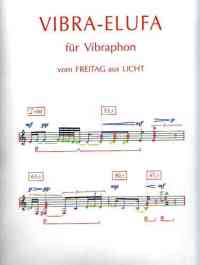 created for a long time. I never thought I would appreciate this music in my life, I was all about tonal music. I loved Listening to harmonies, leading tones and cadences. I sounded like the typical freshman music student, but it all changed. As I began preparing for a recital, I was introduced to a piece by Karlheinz Stockhausen called “Vibra-Elufa.” This is a Vibraphone solo and it is HARD! This is an A-Tonal solo that uses different mallets to achieve a variety of timbres. I started reading down the first page, and I was on the verge of putting it away and picking something else. The original reason I chose this piece was that I wanted some variety and history in my recital. I never gave up and finished learning the piece and performed it in a masterclass. That is how I began to enjoy the music.
Tonal music is better right?
Look, I will not make up a decision for you, but let’s talk about this. Tonal music is great! I love tonal music. If I am taking a date to a concert, I am NOT taking her to see a 1900’s Symphony by Schoenberg. I’d probably take her to see a Beethoven Symphony long before I even show her Schoenberg.
Here is what makes tonal music so desirable and easy to listen too.
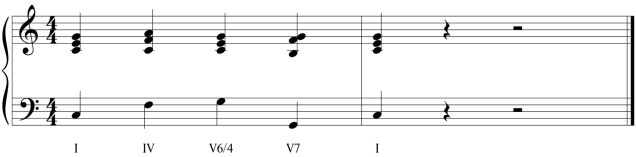
A classic perfect authentic cadence is so nice to hear. It is the ultimate resolution in music. What makes this even better is how perfect the voice leading is. Every rule is followed perfectly and it is easy to listen to.
Maybe that’s where 21st-century music differs?
How is 21st-Century Music Better?
Ok, music is all subjective so I will never tell you what is better. The reason I enjoy 21st-century music is because of the rules to composition. THERE ARE NO RULES! You can literally write what you want. If you want parallel fifths, do it. If you want a tritone-based melody, go for it. The ideas are limitless. In tonal music, you are restricted by chordal functions, voice-leading, cadential motions, and more. How many different ways can you write a V-I cadential motion? The answer is 24. there are 24 keys, which means you can only do it 24 times. In ATonal music, your ideas are not limited to the key signature. In ATonal music, there is no one pitch that stands out more than the other. Every note is created equal, essentially.
So what do I listen to?
That’s an easy question to answer. Listen to the sounds. Generally speaking, music has a purpose and an inspiration while it’s easy to achieve that in tonal music, that’s where the challenge lies for ATonal music. Understand the theme of the piece before listening to it. If you picked up a piece of music entitled “Frisson” the first thing you need to do is find out the meaning of that word and how it relates to the composer. From there think about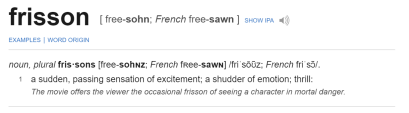 what you might hear in the piece. The number one rule to listening to this music is to not have expectations. Expectations tend to lead you back to tonal music. This piece, in my mind, sounds fast with a lot of large intervals. Maybe the smallest interval is a major 3rd. If the interval is not bigger than a major 3rd I could see it being a chromatic run-up and down the instrument.
Part 2
This requires some knowledge of ATonal theory!
How would you write ATonal music?
If you just write a bunch of different notes with random rhythms, you are not exactly achieving a theme or goal. ATonal music has a lot of different variables. Let’s take the example from above, “Frisson” and we are going to write a piece. First thing I like to look at is a tone row. If you don’t know what a tone row is, go read about it. Our tone row is going to be “50841t72e639.” You’ll see how I use this when we get started. Here are some other things you need to decide on first along with tone row: (my answers are in parentheses)
- Instrumentation – (Solo Vibraphone)
- Ryhtmic or not – (Not)
- Timbre – (Exciting)
- Possible length
- Consistent forms/intervals – (Not too sure yet)
So, step one, establish the key and mood…Which in this style of music is chromaticism and speed. That means we are writing a fast chromatic scale right at the beginning. After that, I want to establish my tone row which is exactly what I did.
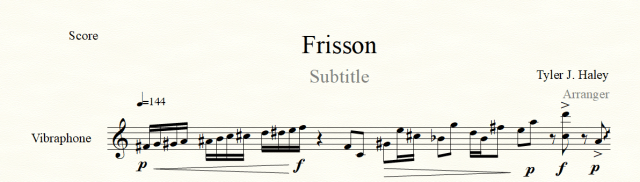
A couple of things you should look at and notice;
- No time signature
- No bar lines
- No pedal markings
So when I said no rhythmic restrictions earlier, I achieve that here by not having any sense of time or end of phrases. So I took away the bar lines and time signature. The time signature is embedded as 1/4 to help with the accidentals. The pedaling will be added later. At this stage in the game, I am just trying to get a good structure.
I began playing around with the tone row from earlier and found a prime form that I enjoy hearing which is (0258) There are times that this is very apparent in the piece. In the first impact point of the piece, I use that prime form in both hands at once outlining different chords. Right at tempo marking 146, it starts the phrase. 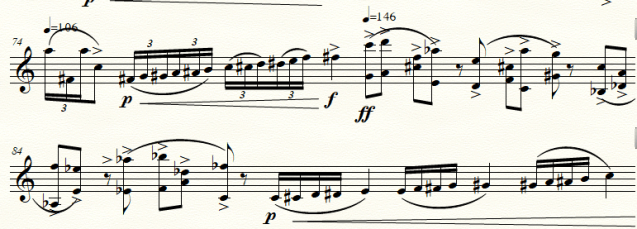
If you analyze the top line as one and the bottom line as a different one, every 4 notes are one chord with the prime form (0258). Also notice how large the intervals are, and how many chromatic scales there are throughout the fast sections. Keeping this clear throughout the piece is important for the theme we talked about earlier.
Contrasting Sections
This is an extremely important point in this composition process. You must think of ways to make the piece interesting. If it is all fast chromatic lines, the audience will tune it out after 30 seconds. You have to make the composition interesting. So I have made sections that are very slow and delicate. Here is how I explain it. The second to last definition of Frisson is “A shudder of emotion.” When I think about emotional times, musically I feel slow non-complex melodies. In ATonal music, everything is complex so this brings a new challenge to the table. Check out what I did below starting at tempo marking 80.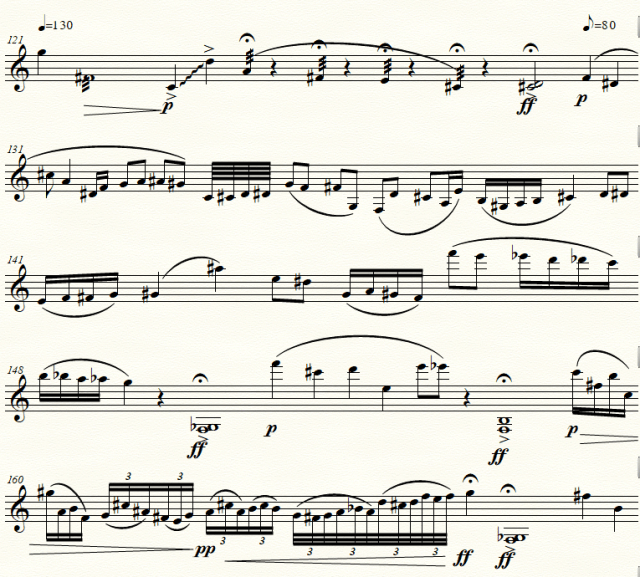
This passage is very slow. I made the intervals a little smaller to help with the delicateness of the mood. There are some fast licks to help contrast the slow things, but that is all artistic choice.
Concluding a piece
So, in tonal music, it is a lot easier to conclude a piece with a PAC (Perfect Authentic Cadence) but you do not have any of that in ATonal music. For this piece, I had the idea of using an idea from centricity. Centricity uses a “center” but still follows the chromaticism characteristic of ATonal music. My center was pretty easy to decide on, which is F, or pitch class 5. There are 2 reasons for this;
- It is the lowest note on the Vibraphone
- it is the beginning of my tone row that I dictated earlier
Those ideas helped me create a pretty cool line that concluded the piece. Check out the final product below and let me know what you think!
End of blog
If you have any questions, comments or concerns, feel free to contact me and I would love to talk with you on whatever you may ask. Thanks for reading!


 Tyler J. Haley