
Weekly Update
I have played through all of the written etudes so far. My favorite one so far is definitely Etude 2. The reason I say that is because it is just so musical! It is can easily be accomplished by a beginner with the right amount of time and detailed work.
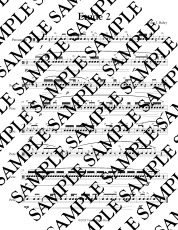
Etude 2 w/ Watermark
After playing through all of them I made the necessary adjustments and got them ready to send out. I am currently waiting to get all my written work proofread by a professional writer to make sure I am writing English. I have a few friends that are very excited to see what I have done so far and they have offered their time to help me make sure this thing is ready.
Biggest Struggles This Week
TIME! I know it sounds obvious, but I did not plan on the amount of work I had planned for this week. I found the time to do what needed to happen, I stayed up later than I should have, worked through my lunch time, and used up every last minute that I had. I met my weekly goal, but I need to manage my time a little better for this upcoming week because I got a lot to do this week.
What I Learned
This week I wrote a short essay about two very important topics in percussion literature. Janissary music and the side drum/tabor are kind of the beginning of the percussion trend. You see, I am taking a class on percussion literature and one of the topics is entitled “History of Snare Drum” and I thought to myself “How convenient is this unit?” I’ll talk later on about what I learned, but essentially what I did was take that information, cite it, and created a new section in this book.
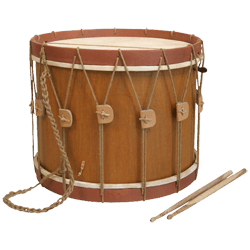
Tabor https://www.medievalcollectibles.com/c-353-percussion-instruments.aspx
So, essentially what I learned was that the tabor was the beginning of the snare drum phenomenon. Although, it was the side drum that helped introduce what we know as the modern day snare drum. What I learned was that as the tabor got bigger in size, it eventually evolved into the side drum. So the next question is “Why does that make a side drum a snare drum?”
A tabor is a double-sided drum, and a side drum is a double-sided drum as well. The difference is that the snares on a tabor are on the batter side of the drum while the side drum has them on the resonance side. Like our modern day snare drum, the side drum is similar in that aspect. In thousands of articles, you can read about how in the modern day orchestras they still call for the side drum, but not the tabor. that has actually been happening since about the 18th century. Think about when the last time you had a part that said “tabor” and then think about when you last saw “side drum.” In my many years of percussion, I have yet to see a “tabor” part, but I always see “side drum.”
What I’m Doing for Next Week
Next week I want more etudes and some more research into different excerpts. While I am more of an orchestral drummer, I want to research more wind band repertoire. I have experience playing Holst and Grainger, but every college percussionist does. I want

to research more David Maslanka, John Barnes Chance, William Schuman, and Claude Smith. While I don’t know too much about these four, I do know that every wind band plays pieces by these four composers consistently. While these composers are still under American copyright laws, I see it being very difficult to obtain excerpts to help me with this project. Regardless of that, I will do my best to get excerpts for these studies.
Want to get Involved?
I am still accepting applicants to join me in this project. The steps are extremely easy. Just go to my projects page and scroll to the bottom. Follow the steps and you are all set! Have any questions? Fill out my contact form and I will get back to you as soon as possible.


 Tyler J. Haley